
The Nottingham Inquiry: what must change for victims
The Nottingham Inquiry has given victims and families a voice. It now needs to deliver truth, accountability, and meaningful change.
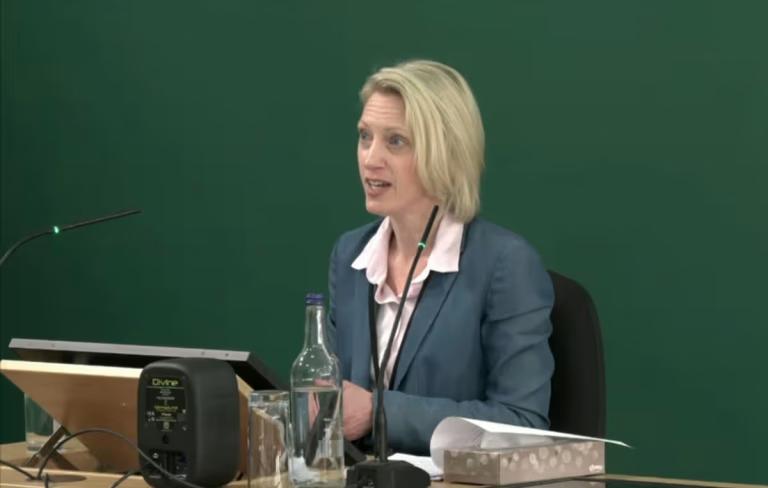
On Friday, I gave evidence at the final oral hearing of the Nottingham Inquiry, bringing to a close 14 weeks of evidence from 164 witnesses.
The attacks in Nottingham on 13 June 2023, and the failures in the years leading up to them and in their aftermath, have been the focus of this Inquiry: to seek answers, accountability, and lessons for the future.
It has been a profound and often deeply difficult process. It has required victims and bereaved families to revisit the most painful moments of their lives, showing courage, dignity and determination throughout.
At its heart are the lives lost: Barnaby Webber, Grace O’Malley-Kumar and Ian Coates, and those whose lives were changed forever that day in June 2023: Wayne Birkett, Sharon Miller and Marcin Gawronski.
This Inquiry is about all of them.
As Emma Webber, Barnaby’s mother, said of the surviving victims in a press conference on Monday morning, “what they have had to endure was unfathomable… and they’ve often been ignored and overlooked, and that’s not right.”
She described the process as “brutal, bruising and harrowing beyond measure, but… so very necessary.” She was also clear in her conclusion: “Every single agency failed. Every single one. Without exception.”
Barnaby’s father, David Webber, was equally clear about what must come next: “I can’t get to my death bed without change… This can’t continue.”
These words underline why this Inquiry matters. It is now crucial that it leads to meaninful change.
Basic rights are not being delivered
At the heart of my evidence to the Inquiry is the experience of victims within the justice system.
The Victims’ Code sets out what victims should be able to rely on after a crime: respectful treatment, clear and timely information, and access to appropriate support. These rights are not optional. They are essential if victims are to understand what is happening, make informed choices, and remain engaged with the justice process.
Yet the reality described by victims is very different.
Too often, victims and bereaved families experience a system marked by long delays, poor communication and responses that compound trauma rather than ease it. Many are required to repeatedly explain their circumstances, chase basic information and navigate complex processes with little support or a voice in proceedings.
In evidence to the Inquiry, we heard clear examples of this, including the surviving victims not being told they could attend hearings remotely, or not being kept updated in a way that reflected their needs.
As I said during my testimony, these are not marginal issues; these are victims’ basic rights not being delivered.
When victims cannot rely on the system to meet even its most basic obligations, trust begins to break down.
As Ian Coates’ son, James said: “For two and a half years, we’ve watched organisations close ranks, mark their own homework, and the inquiry must be the true reckoning.”
A system not designed around victims
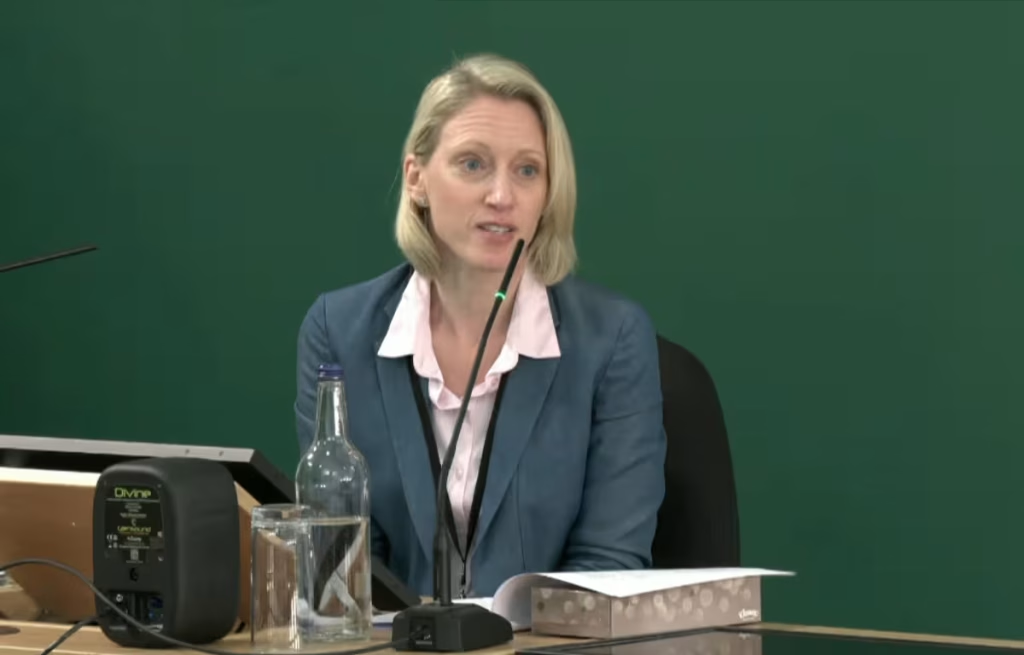
My evidence to the Inquiry focused on identifying recurring structural issues, particularly around communication, coordination and accountability.
At the centre of this is a system that is not designed around victims. No single agency is responsible for overseeing the victim’s journey as a whole or ensuring their rights are consistently delivered, nor a clear single point of contact across police, prosecutors and the courts.
The result is fragmentation. Families describe inconsistent and irregular communication, periods of silence followed by overwhelming volumes of information, uncertainty about who to contact, and information that is unclear or difficult to understand.
Too often, victims are left to join the dots themselves, navigating between agencies, chasing updates and carrying the burden of coordination at the moment they are least able to do so.
At the core of these experiences is a deeper, systemic issue: the gap between the rights set out in the Victims’ Code and what is delivered in practice.
This gap is particularly acute for victims of mentally disordered offenders, where access to information after conviction does not operate in the same way as for other victims. In these cases, information is often held by hospital managers rather than probation services, and decisions about what can be shared are made with a primary focus on patient confidentiality, not victim safety or wellbeing.
This can leave victims and families without clear explanations, without a consistent flow of information, and without any meaningful route to challenge decisions made about what they are told.
As Grace O’Malley-Kumar’s father, Dr Sanjoy Kumar, has emphasised, transparency in these processes is essential if families are to understand decisions that affect them.
As Victims’ Commissioner, I have consistently called for stronger safeguards in this area, including through amendments to strengthen duties around information-sharing, require written explanations where information is withheld, and establish an independent route of challenge. Unfortunately, government decided not to take these proposals forward during the passage of the Victims and Courts Act.
The ‘Victim Care Hub’ model
Addressing all these issues requires more than incremental change. It requires a system designed around victims, not one they must navigate alone.
In my evidence, I have proposed the development of a ‘Victim Care Hub’: an, independent single point of contact to act as a “justice navigator”, ensuring victims know who to turn to, do not have to chase answers, and can trust that their rights are delivered and needs are understood – and acted upon.
Alongside this, I continue to call for the introduction of a ‘victim unique identifier’, so that information follows the victim through the system. Much like an NHS number allows different parts of the health system to work together around a patient, a shared identifier would allow justice agencies to build on what is already known, reducing repetition and supporting a more trauma-informed approach.
There must also be more consistent access to independent victim advocates, and improved systems for monitoring whether victims’ rights are delivered.
The Inquiry has also highlighted the important, and often complex, role of the media.
Responsible reporting is essential to open justice. It ensures transparency, holds institutions to account, and gives victims and families a platform to share their experiences.
But it can also have a profound impact on those at the centre of a case. Some victims describe learning critical developments through media coverage before they are formally informed. Others speak about the distress caused by repeated or insensitive reporting.
In an age of instant reporting, this reinforces the need for timely, accurate and compassionate communication from criminal justice agencies. No victim should learn the outcome of their case through the media before hearing it from the justice system.
The Nottingham Inquiry has given victims and families a voice.
They have spoken with clarity and courage about what they have experienced, and what must change.
The challenge now is not just to listen, but to act. The deaths of Barnaby, Grace and Ian must lead to meaningful improvements so that future tragedies are prevented.
Ultimately, this Inquiry will be judged not by what it reveals, but by whether it leads to a justice system that delivers consistently and reliably for victims.
As Emma Webber put it on Monday morning: “This isn’t about vengeance. It’s about doing the right thing, righting this grievous wrong and changing the systems that failed. The excuses stop here and accountability starts today.”
When Deborah Taylor KC delivers her final report next year, it cannot be allowed to suffer the fate of so many of its predecessors. Its findings and recommendations must be acted upon, not left to gather dust.